Willa Lorenz · 15 September 2026
Engineering Light in Harsh Climates: Specialized Beam Applications for Arid Zone Infrastructure
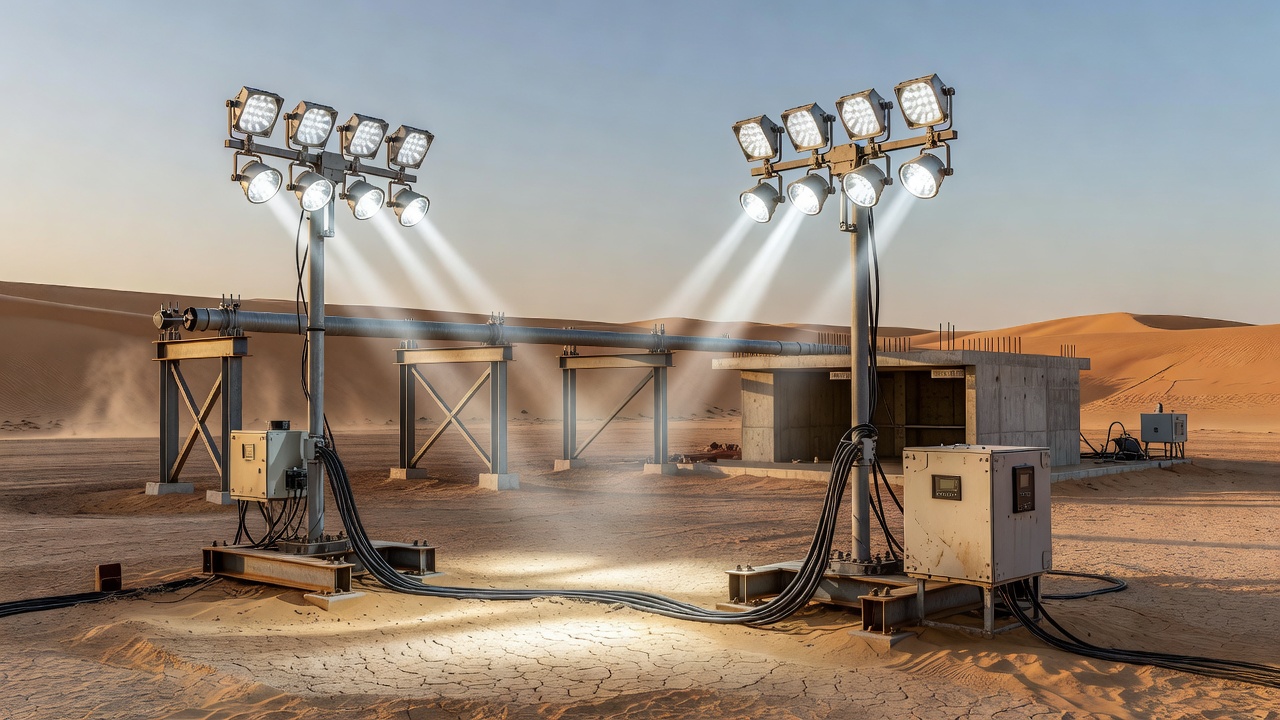
Arid zone infrastructure demands lighting solutions that withstand extreme temperature swings, persistent dust, and high ultraviolet exposure while maintaining consistent performance over long distances, and specialized beam applications address these conditions through focused optical designs that reduce scattering and extend operational range. Engineers have developed systems using narrow-spectrum LEDs and adaptive collimators that concentrate output into tight beams, which helps minimize energy loss from airborne particles common in desert environments.
Environmental Challenges for Optical Systems
Temperatures in many arid regions exceed 45 degrees Celsius during peak months while dropping below freezing at night, which creates repeated thermal stress on lenses and housings; research from the National Renewable Energy Laboratory shows that material expansion coefficients must stay below 5 parts per million per degree Celsius to prevent misalignment in beam-forming arrays. Dust storms add another layer of difficulty because abrasive silica particles erode surface coatings and reduce transmittance, yet coatings such as diamond-like carbon layers have demonstrated retention of over 92 percent optical efficiency after simulated 500-hour exposure tests conducted in Australian outback facilities.
Beam Design Principles in Dry Climates
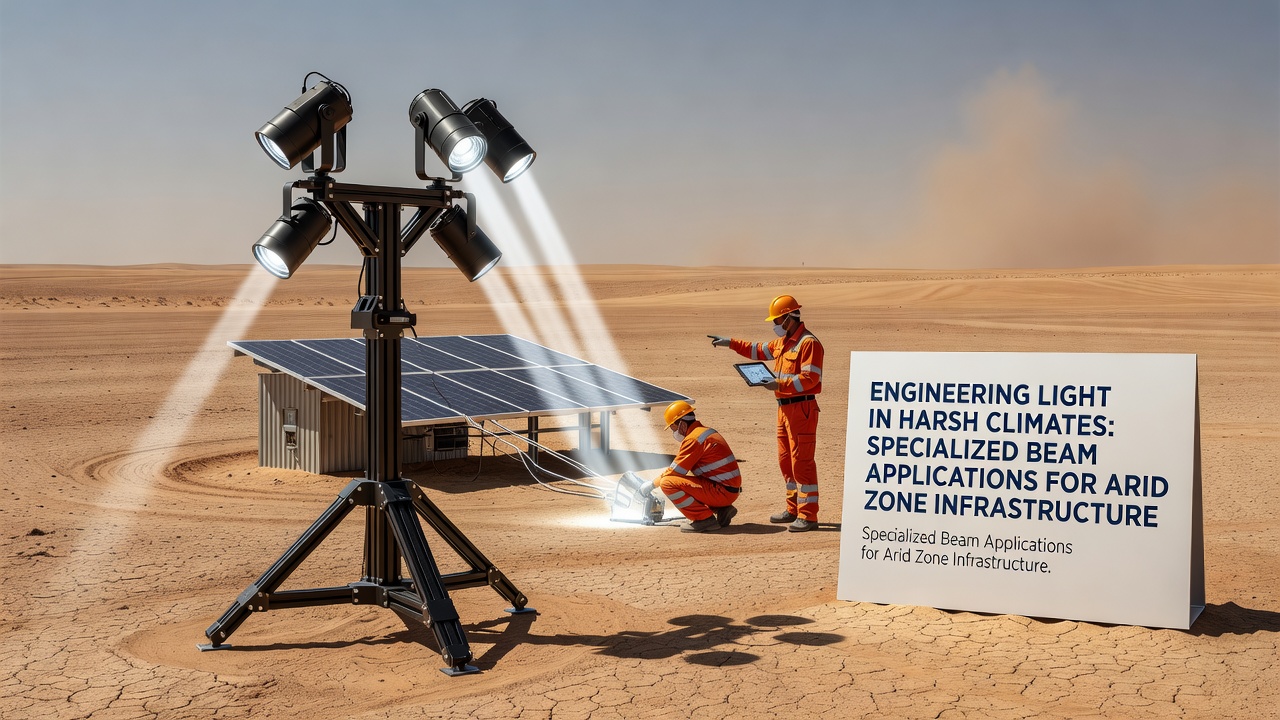
Focused beam architectures rely on aspheric reflectors and micro-lens arrays that achieve divergence angles under 2 degrees, which allows light to travel farther before atmospheric attenuation becomes significant. Data from field deployments in the Middle East indicate that such configurations cut required power by 35 percent compared with conventional flood lighting while preserving illuminance levels above 50 lux at 200 meters. Adaptive control algorithms adjust beam angle and intensity based on real-time particulate sensors, and these systems integrate with solar power arrays that store excess daytime generation for nighttime operation.
Infrastructure Applications
Highway corridors crossing arid expanses use linear beam projectors mounted at 12-meter intervals to create continuous guidance lines that remain visible through haze, and similar technology supports runway edge lighting at remote airstrips where sand accumulation historically caused frequent failures. Power transmission corridors benefit from infrared beam sensors that detect vegetation encroachment or structural shifts without requiring physical patrols, and September 2026 marks the scheduled rollout of a 180-kilometer pilot segment in the southwestern United States that will test integrated beam-based monitoring alongside existing SCADA networks.
Desalination plants along coastal arid zones employ ultraviolet beam arrays for biofouling control in intake channels, and the narrow wavelength targeting reduces energy consumption while limiting impact on surrounding marine ecosystems. Observers note that facilities using these arrays report 28 percent lower maintenance cycles than those relying on chemical dosing alone, according to operational logs compiled by regional water authorities.
Material and Thermal Management Advances
Aluminum nitride substrates and graphene-enhanced heat sinks have replaced traditional copper in high-output beam modules because they maintain thermal conductivity above 170 watts per meter-kelvin even after prolonged dust exposure. Studies published by the Desert Research Institute in Nevada demonstrate that passive radiative cooling surfaces applied to fixture exteriors can lower internal temperatures by 8 to 12 degrees Celsius during daylight hours, which extends component lifespan and stabilizes beam collimation. Redundant sealing systems rated IP68 and IP69K prevent moisture ingress during rare but intense flash floods that occasionally affect wadi-adjacent infrastructure.
Data and Performance Metrics
Long-term monitoring across multiple sites reveals average uptime exceeding 98.4 percent for beam-based systems versus 91.7 percent for legacy lighting, with the largest gains recorded during dust events when conventional fixtures required manual cleaning every 72 hours. Energy consumption figures collected over 24-month periods show reductions between 22 and 41 percent depending on traffic density and ambient light conditions, and these savings scale favorably as array sizes increase in large-scale solar farm perimeters.
Conclusion
Specialized beam applications continue to expand across arid zone infrastructure because the combination of precise optical control, robust materials, and sensor-driven adaptation addresses the dominant environmental stressors encountered in these regions. Ongoing deployments scheduled through 2026 and beyond will supply additional performance data that can refine design parameters for future projects worldwide.